
Roman Republic Tours
Society Tour
Overview
Roman culture emphasized three main values: discipline, strength, and loyalty. Romans were more practical than many modern Westerners. They made use of slave labor, and sometimes forced their slaves to fight for entertainment. However, even though slaves were viewed as property, they could still be freed and even own land.
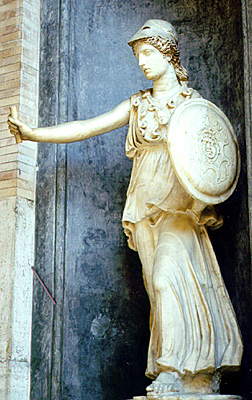
Roman religion began as a nature-based pagan belief system. The first gods were numina, which were the spirits of everything in nature, and the Lares, which were protectors of people's houses and property. Over time, these deities evolved into the Roman gods we still hear about today, such as Jupiter and Juno, king and queen of the gods, and Minerva, goddess of wisdom and prosperity.
Our tour offers a close look at the grand, elaborate art dedicated to celebrating Roman culture.
History
Tour Guide Ben

Rome's main recurring social issue was the large status gap between the rich and the poor (patricians and plebeians), and the disappearance of the middle class. When the republic was first formed, only the wealthiest of the landowners were eligible for public office, though all freeborn landowners could vote. Eventually, however, plebeians were granted representation in Roman government.
The status gap created social tensions, which, similar to modern America, gave rise to an escapist culture. Roman citizens could take time off to see a gladiator fight, where they could distract themselves, enjoying entertainment, both classes forgetting their differences and cheering their favorite fighter on together.
Our Tour Options
Our tours are:
A tour of Roman public life, such as entertainment at the Colloseum and forum, and an in-depth look at social interactions in ancient Rome. This tour will touch on Roman religion.
A tour of the two main social groups, following a wealthy patrician and then a poor plebeian through their daily lives. This tour is meant to illustrate the background of Roman culture, government, and society.